Table of contents
Your monthly budget at a glance
Housing: the biggest expense and the one you can optimise most
Utilities and internet
Groceries and eating out
Getting around the city
Health, insurance and other fixed costs
Upfront costs: what you pay before your first night
Valencia versus Madrid, Barcelona and other European capitals
Where the all-inclusive model fits in
Frequently asked questions
What is a realistic budget for a single person in Valencia in 2026?
What is the biggest expense of living in Valencia?
Is Valencia cheaper than Madrid or Barcelona?
How much does public transport cost in Valencia?
What upfront costs are there before moving?
How Much Does It Cost to Live in Valencia in 2026? A Real Monthly Budget Breakdown
Valencia has become one of the favourite landing spots for international professionals, digital nomads and families who want a Mediterranean lifestyle without the price tag of Madrid or Barcelona. But before packing your bags, everyone asks the same question: how much money do you actually need each month to live well here?
This guide breaks down the cost of living in Valencia with real 2026 figures: housing, utilities, groceries, transport, leisure and the upfront costs that almost no one budgets for in time. These aren't generic averages — they're verified ranges you can use to build your own budget before signing anything.
Your monthly budget at a glance
Here are three honest snapshots of what it costs to live in Valencia, by profile. Each total is the final figure after market-rate rent, groceries, utilities, transport and a normal social life. Rent is the lever that moves the needle the most, so we break it down in detail below.
| Item (€/month) | Single person | Couple | Family of 4 |
|---|---|---|---|
| Rent (market rate) | 750 – 1,200 | 1,100 – 1,600 | 1,600 – 2,200 |
| Utilities + internet | 100 – 140 | 130 – 170 | 160 – 200 |
| Groceries | 250 – 350 | 450 – 520 | 800 – 900 |
| Transport | 20 – 45 | 40 – 90 | 60 – 110 |
| Leisure and going out | 150 – 350 | 300 – 500 | 250 – 450 |
| Private health insurance | 50 – 90 | 100 – 180 | 180 – 320 |
| Approximate total | 1,400 – 2,200 | 2,200 – 3,000 | 3,200 – 4,300 |
As a quick benchmark: on around €1,800 net per month, a single person lives comfortably in a good neighbourhood; on €1,300 the budget gets tighter. Digital nomads tend to put the sweet spot at roughly €2,000 for the quality of life they get in return.
Housing: the biggest expense and the one you can optimise most
Rent is by far the largest line in the budget and where your choice of neighbourhood shows the most. A room in a shared flat runs between €400 and €600; a one-bedroom apartment starts at around €750 in areas such as Algirós, Patraix or Benimaclet and climbs to €900 – €1,300 in Ruzafa, l'Eixample or Ciutat Vella. Living one metro stop beyond the centre can easily mean €300 less per month — €3,600 a year.
One detail changes the picture for newcomers: furnished mid-term rentals (from fifteen days to eleven months) usually cost 15 % to 25 % more than an annual contract, but they include services, require no Spanish bank account or employment contract, and give you flexibility while you decide which neighbourhood suits you. If you're planning to settle in for a few months, compare the total cost, not just the headline rent. We go deeper in our guides to monthly apartment rental in Valencia and mid-term rentals.
Utilities and internet
For a flat of around 85 m², the electricity and gas bill comes to roughly €90 – €140 per month, peaking in summer with air conditioning and in deep winter with heating. Spain has some of the highest electricity prices in Europe, and older, poorly insulated buildings feel it most. Adding water and fibre internet, a realistic utilities figure lands between €100 and €175 a month depending on the size of the home and household habits.
Groceries and eating out
Someone who cooks at home and shops at chains like Mercadona spends €250 – €350 a month; a couple, €450 – €520; a family of four, €800 – €900. Buying fresh produce at the Mercat Central or local markets late in the morning helps stretch the budget further.
Eating out remains affordable by European standards: a full set lunch menu costs €13 – €15, and a coffee just €1.50. A normal social life — dinners, drinks and the odd weekend out — adds €200 – €400 a month. Eat out every day and that line can climb a further €300 – €500.
Getting around the city
Valencia is compact and very cycle-friendly, so transport is one of the lowest expenses. A single metro ticket for one zone costs around €1.50; the EMT bus ten-trip pass is €8.50 (€5.10 with the discount in force for the first half of 2026), and the monthly youth pass is roughly €12.50 – €14.90 for under-30s. Combining a bike with public transport, most people rarely go beyond €20 – €45 a month. With your own car, mobility climbs to €250 – €500 between fuel, insurance and parking.
Worth keeping on your radar: regional and city transport subsidies are confirmed through 30 June 2026 and, if they aren't extended, some fares could rise from July. Check the current price before buying your pass.
Health, insurance and other fixed costs
People who don't contribute to the Spanish social security system usually take out private health insurance, which runs €50 – €90 a month per person and is a common requirement for certain visas. Add a mobile plan (€10 – €20 on bundled tariffs) and a gym membership (€25 – €45) — small but recurring items worth factoring into your budget.
Upfront costs: what you pay before your first night
Monthly rent is only half the story. Before moving in, expect several initial payments that pile into the first invoice:
- Deposit. In the Valencian Community, temporary-use contracts require two months' deposit, which must be lodged with the Generalitat Valenciana within fifteen working days. Standard residential contracts follow different rules.
- Agency fees. On the traditional market these can amount to one month's rent; with rentals managed directly by the owner they usually don't apply.
- First month in advance and, where relevant, the cost of furnishing the flat and setting up utilities if it arrives empty.
- Pets. If you're moving with animals, factor in the relevant supplement. In our buildings we welcome up to two pets with a €200/month supplement per pet, except in the Calle Turia building. We cover this in our guide to pet-friendly apartments in Valencia.
One important note on paperwork: registering on the local census (empadronamiento) is a common step when you settle in, but not every contract allows it. Temporary-use contracts can't be used to register, because doing so would legally reclassify the contract (Article 3 of the Spanish Tenancy Act, LAU) as a primary-residence lease. If you have school-age children, also add enrolment and fees if you choose an international or private school.
Legal notice: the information in this section is for general guidance only and does not constitute legal advice. Tenancy and registration rules can change and depend on each individual situation; always consult a professional before signing a contract.
Valencia versus Madrid, Barcelona and other European capitals
Valencia's strongest argument is the ratio of quality of life to cost. Rent and leisure sit clearly below Madrid and Barcelona, while the climate, the beach, the food and a walkable city all work in its favour. Compared with capitals like Paris, Amsterdam or Munich, everyday expenses are noticeably lower — which is exactly why so many remote professionals choose Valencia as a base without giving up an international salary.
Where the all-inclusive model fits in
When you compare a traditional lease with a furnished, all-inclusive option, the former looks cheaper at first glance. The honest number appears once you add what the annual contract leaves out: furnishing the flat, utility set-up and bills, internet, cleaning, maintenance, the two months' deposit and, often, agency fees — plus the time and friction of arranging it all without a local bank account or employment contract.
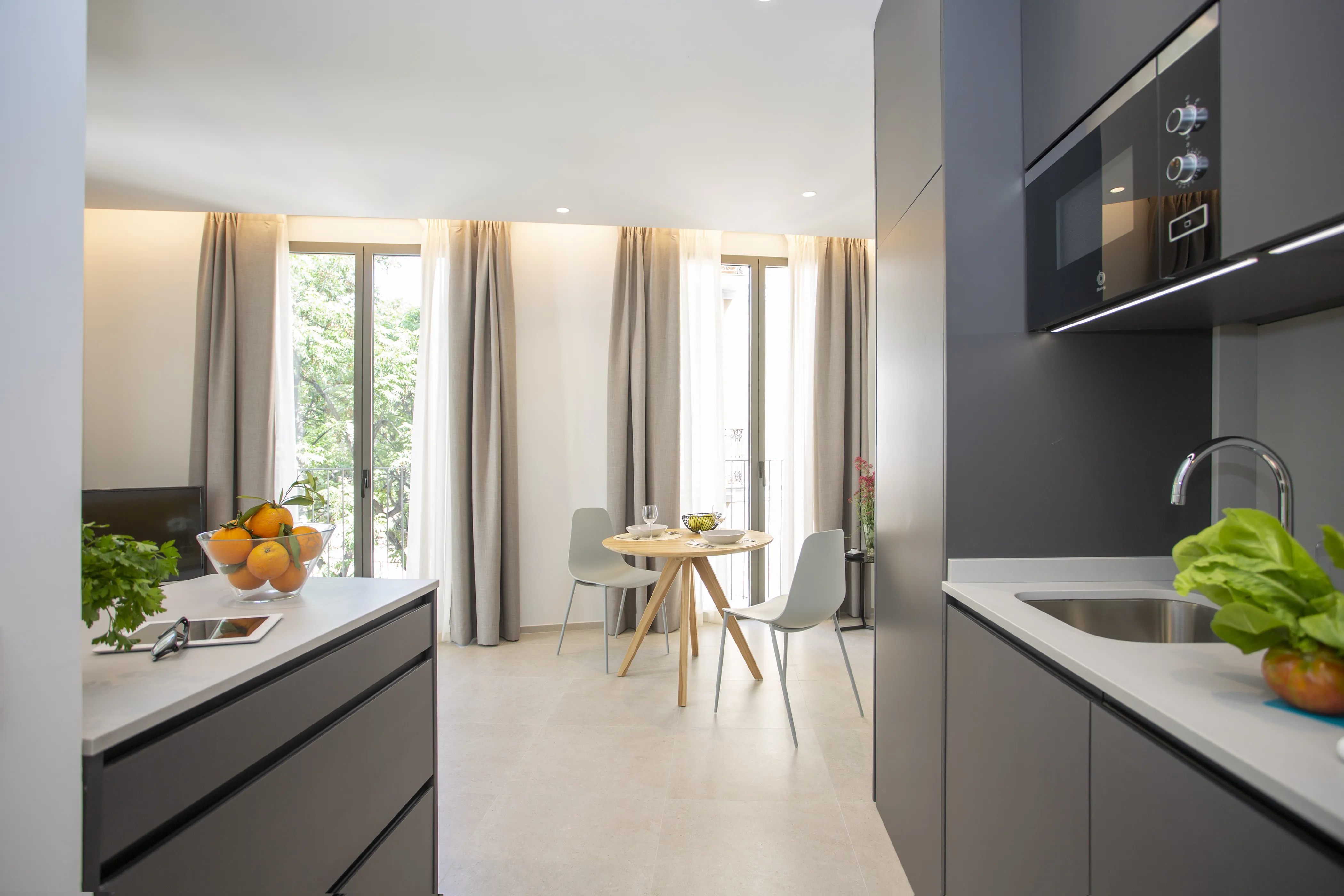
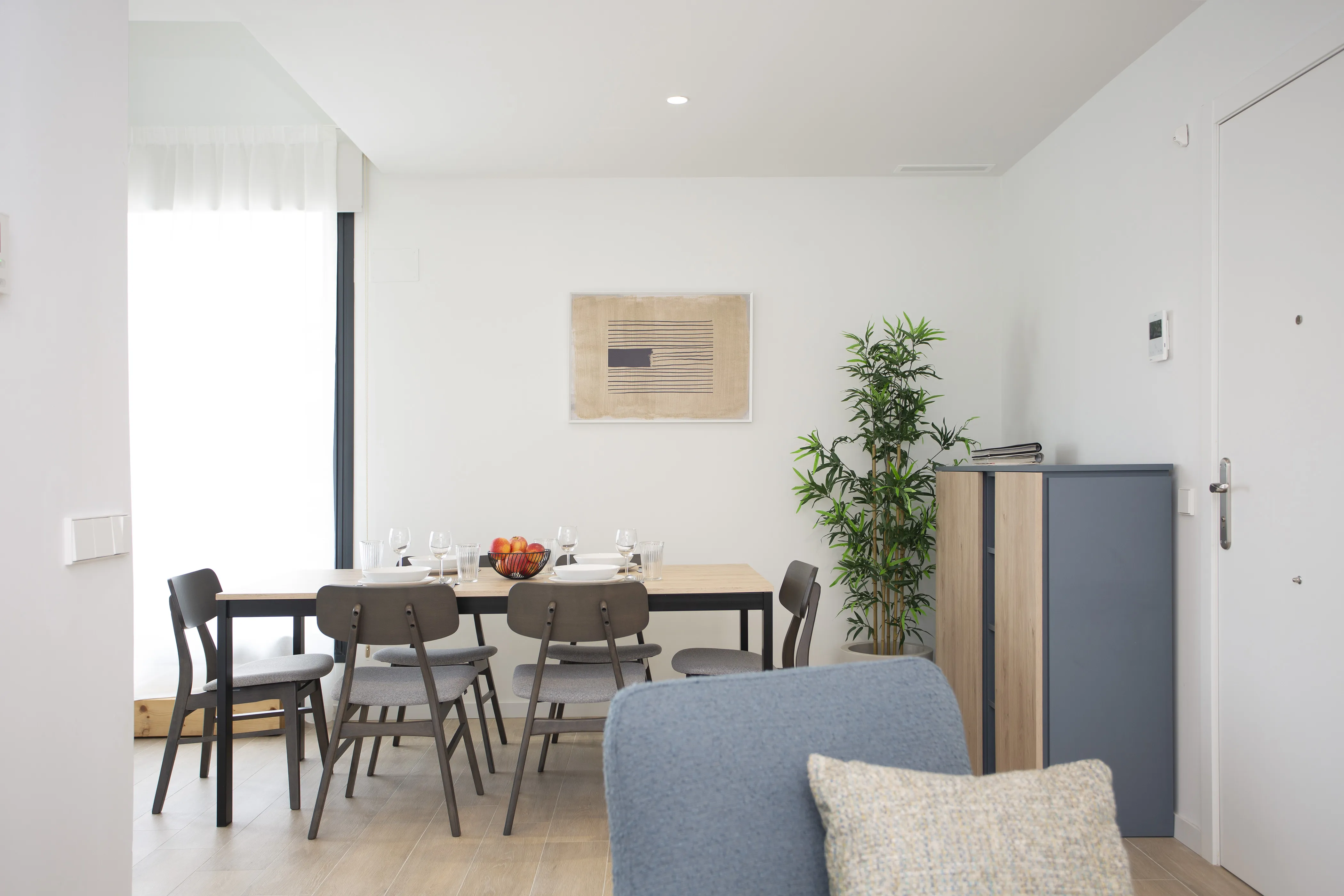
At DLS Spaces we manage more than 80 of our own furnished apartments across seven buildings in Valencia, with an in-house cleaning and maintenance team and everything included from around €1,800/month. For a stay of a few months, that single number is usually more comparable than it looks once you add up all the extras of a conventional rental. If you want to see how the different routes stack up, our analysis of the best mid-term rental platforms in Valencia is a good place to start.
Frequently asked questions
What is a realistic budget for a single person in Valencia in 2026?
Between €1,400 and €2,200 a month, all in. Rent is the deciding variable: a one-bedroom in Ruzafa or l'Eixample runs €900 – €1,300, while Benimaclet or Patraix start around €750. Add €100 – €140 in utilities, €250 – €350 in groceries, €20 – €45 in transport and €150 – €350 in leisure.
What is the biggest expense of living in Valencia?
Housing, without question. It can account for more than half of the monthly budget, which makes the neighbourhood and the type of contract the two decisions with the greatest impact on your total cost.
Is Valencia cheaper than Madrid or Barcelona?
Yes. Both rent and leisure sit below Spain's two largest cities, while keeping a very high quality of life thanks to the climate, the beach and the food.
How much does public transport cost in Valencia?
A single one-zone metro ticket costs around €1.50; the EMT ten-trip bus pass is €8.50 (€5.10 with the first-half-2026 discount), and the monthly youth pass is roughly €12.50 – €14.90. Subsidies are confirmed through 30 June 2026.
What upfront costs are there before moving?
Mainly the deposit (two months for temporary-use contracts in the Valencian Community), any agency fees and the first month in advance. Furnished, all-inclusive options remove much of that initial friction.